We didn't set out to build a startup. We were running a fashion business, and we couldn't answer one question.
CleverSeal wasn't drawn on a whiteboard. It grew, slowly, out of a daily operational problem behind the counter of our own dress boutique, and later, our webshop. The same problem you probably know by heart.
2010
A small dress boutique.
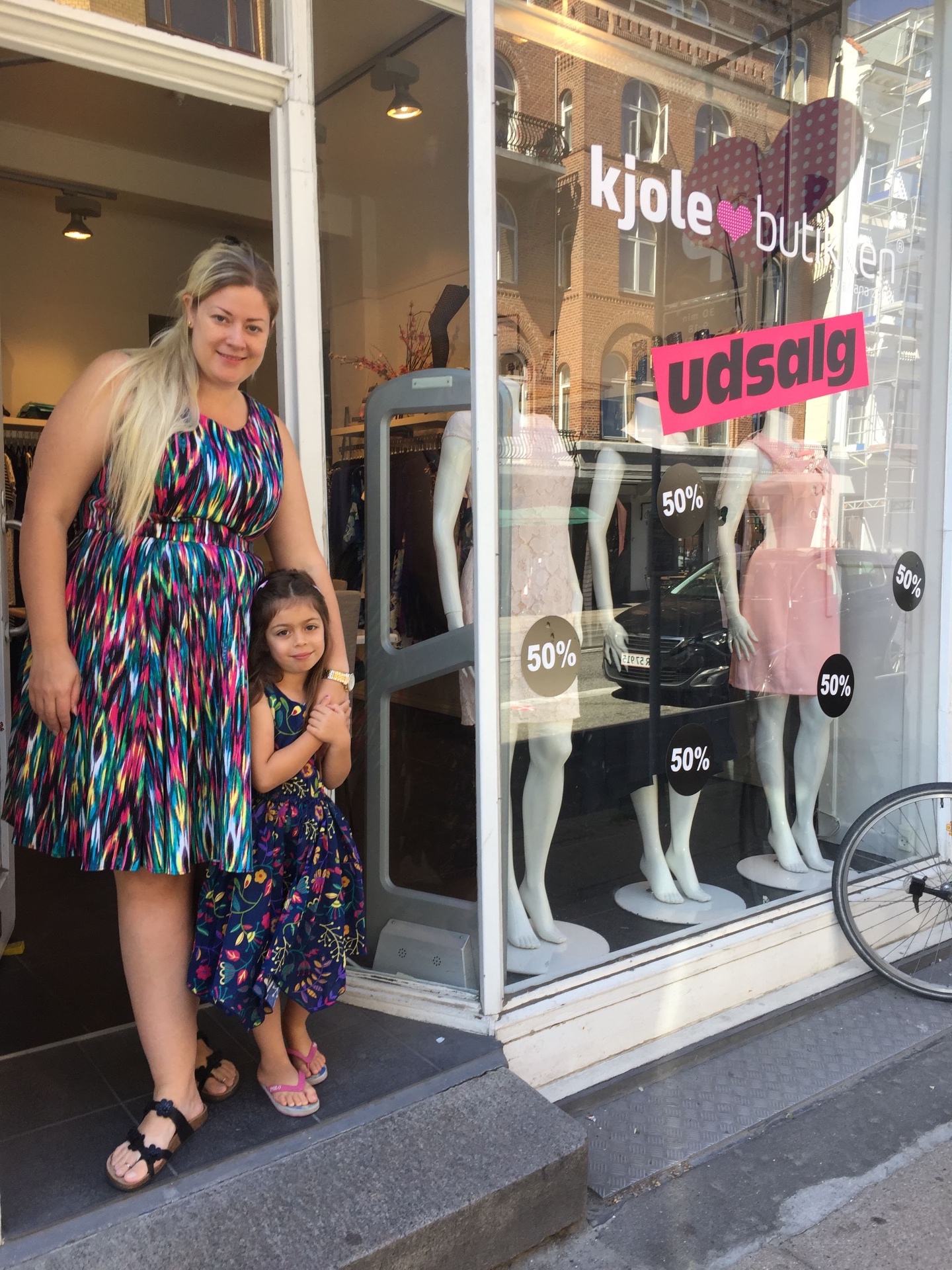
On 2 August 2010, Aliana Pedersen opened Kjole Butikken, "The Dress Boutique", on a quiet street in Frederiksberg. One room. A rack of dresses selected by hand from small labels in the United States. A mirror, a curtain, a counter.
Darius Zafari handled sourcing, negotiations and the shipments arriving from overseas. Aliana chose every piece and greeted every customer. It was the kind of shop where you learned people's names.
Aliana and her daughter Maddie outside Kjole Butikken, Frederiksberg, Copenhagen.
More customers. More garments. More responsibility.
The boutique grew. Rolighedsvej became Rådhusstræde in Copenhagen K. Rådhusstræde became a flagship on Gammel Kongevej. New collections. New staff. New rhythms.
With growth came something quieter, a growing sense of responsibility for every garment that left the shop and every garment that came back through the door.
We chose every collection. We imported it. We photographed every garment. We wrote every description. We uploaded sizes and prices. We invested in marketing. Orders came in. We picked. We packed. We shipped.
None of it was glamorous. All of it was the job. This is the work behind every order.
The Shift
Then shopping moved online.
We opened a webshop. Fittings moved from our mirrors into other people's bedrooms. Customers ordered three sizes, kept one, sent two back. That part was fine, returns are part of this business, and always will be.
What wasn't fine was the pile that grew in the back room. Garments that came back looking new. Most of them were. Some of them, honestly, weren't. And we had no way to tell the difference, not for our customers, not for our staff, not for ourselves.
Years of research, testing, and quiet persistence.
There is no short version of this part. Prototypes that failed. Adhesives that didn't hold. Materials that tore too easily, or not at all. Meetings with engineers, chemists, lawyers, and manufacturers. Slowly, an idea became an object.
We continued because the problem never went away. Every week behind the counter, another returned garment arrived that looked new, and we still couldn't say, honestly, whether it was. We didn't want the next generation of fashion businesses to answer that question with a shrug. That was worth the years.
2010A dress boutique opens on Rolighedsvej 19, Frederiksberg.
2012-2014The boutique grows. Two more locations in Copenhagen.
2015Shopping moves online. Returns become part of daily life.
2016The question won't go away: worn, or only tried on?
2017The idea begins; patent application submitted.
CleverSeal is now protected across 22 European markets. It helps fashion businesses make return decisions that are fairer, more consistent, and easier to explain to the customer standing on the other side of the counter.
We are still a small team. We still answer emails ourselves. We still care about every returned garment, because we remember what it felt like to hold one and not know.
CleverSeal has been supported, accelerated, researched and manufactured through recognised European organisations. Every organisation shown reflects its actual relationship with CleverSeal.
LITO-TRYKIndustrial production of CleverSeal labels.
Where CleverSeal stands today
A patented technology, developed in the open.
CleverSeal wasn't built alone. Funding bodies, research institutes, accelerator programmes and industrial partners each contributed something concrete to the journey.
European Patent grantedEP3580740B1, protecting the CleverSeal method across 22 European markets.